
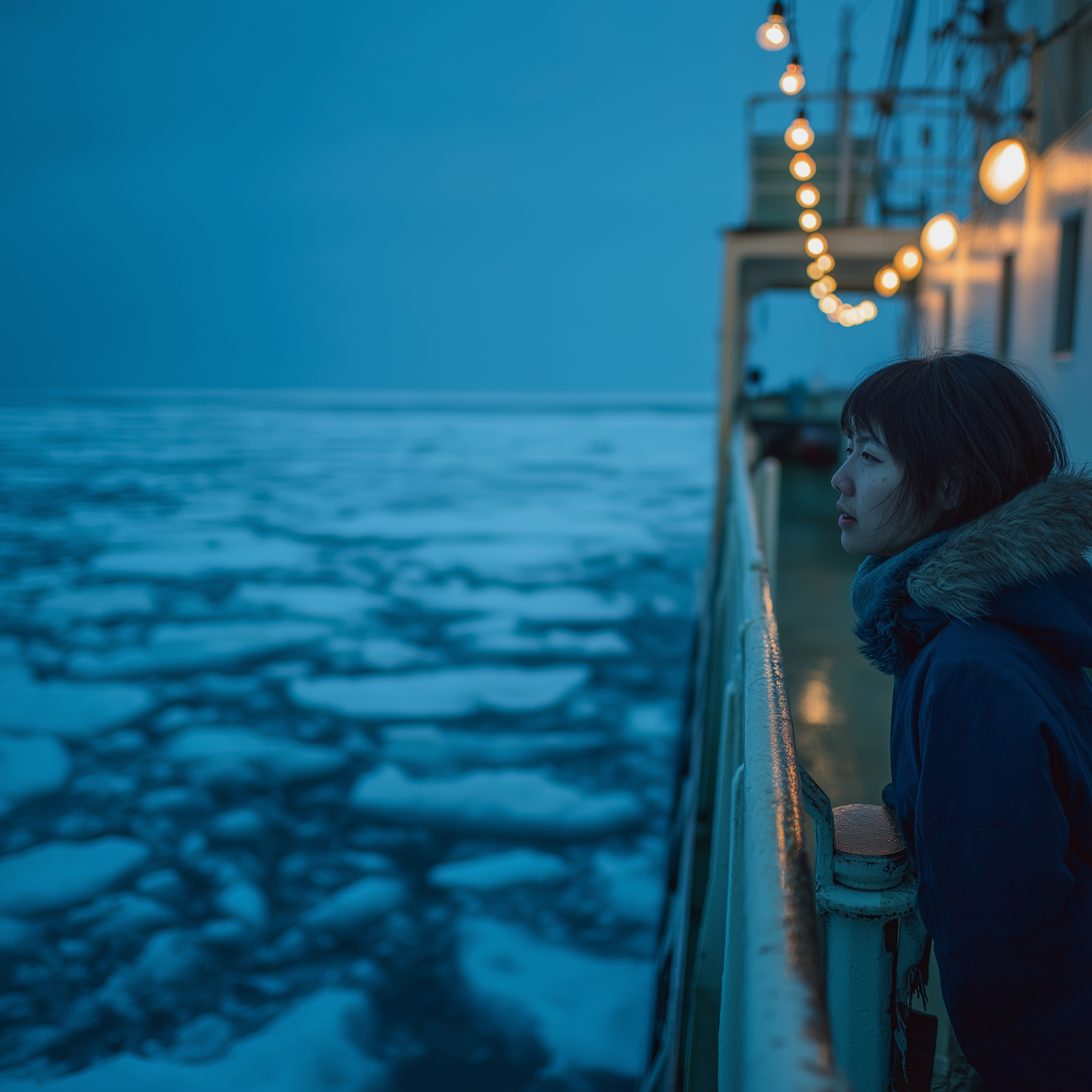
For a long time, the ideal vacation was sold through a narrow visual formula. Warm water, bright sun, easy comfort, polished resorts, predictable pleasure. The promise was simple: travel should remove friction. It should feel smooth, relaxing, and photogenic from beginning to end. Yet more travelers are moving in a different direction. Instead of chasing the softest version of leisure, they are choosing northern sea routes, colder coastlines, harsher weather, smaller ports, and landscapes that do not immediately flatter the visitor.
At first glance, this makes little sense. Why choose wind over warmth, gray water over turquoise, remote harbors over curated beach infrastructure? Why deliberately travel toward a setting that feels less comfortable, less decorative, and less designed to please? The answer is that discomfort, in the right measure, has begun to create a kind of value that the “perfect vacation” often fails to deliver.
Northern sea travel offers something many travelers now feel they are missing: texture, resistance, mood, and the sense that a place exists on its own terms rather than as a service built around their expectations.
The classic vacation model is based on ease. Everything is meant to work in favor of comfort. The climate is inviting, the logistics are simplified, the views are familiar, and the experience is optimized to reduce surprise. There is nothing inherently wrong with this. Rest matters, and many travelers genuinely want exactly that kind of trip. But for others, especially those who have spent years moving through the same visual language of global tourism, this version of travel has started to feel thin.
A destination can be beautiful and still feel strangely interchangeable. One more polished marina, one more curated waterfront, one more sunset calibrated for social media. The comfort remains, but the distinctiveness fades. What is missing is not quality. It is friction. Not suffering, but the small resistance that makes perception sharper and place more memorable.
Northern sea routes often restore that missing element.
Whether the journey moves through the Baltic, around the North Sea, along Nordic islands, past old fishing towns, or toward quieter harbors shaped by fog and wind, the emotional rhythm is different from that of a standard resort holiday. The sea is not presented as a backdrop for leisure alone. It feels active, colder, heavier, and more indifferent. The weather changes quickly. Light behaves differently. Ports are often more functional than theatrical. The landscape does not always try to charm. And precisely because of that, travelers tend to experience it more attentively.
Discomfort changes the way people look.
When the air is colder, when the wind is stronger, when the coastline feels exposed rather than welcoming, the traveler becomes less passive. A person does not simply consume the view. They register it. They feel it physically. They notice the textures of stone, metal, mist, water, harbor light, ferry movement, old wood, silent streets, and working docks. In warmer, easier settings, this level of attention can dissolve into habit. In northern maritime environments, it often returns.
This is one reason northern sea tourism increasingly appeals to travelers who feel exhausted by overly managed experiences. They are not always looking for hardship in any dramatic sense. They are looking for seriousness. They want places that do not immediately translate into vacation clichés. A cold coastal town with a nearly empty quay, a ferry crossing under low sky, a windswept island where the weather controls the pace of the day — these settings create a stronger impression precisely because they are not smoothing themselves into entertainment.
There is also a deeper cultural shift involved. More travelers are beginning to distrust the language of perfection. “Perfect vacation” now often sounds suspiciously generic. It suggests an experience designed to erase difficulty, but also to erase complexity. Increasingly, people want destinations that feel specific, even if that specificity comes with inconvenience. They want to remember a trip not because everything went flawlessly, but because the atmosphere could not have happened anywhere else.
Northern sea routes provide that atmosphere in abundance.
They offer a sense of scale that differs from tropical or Mediterranean tourism. The coast feels more exposed. Human settlement often appears smaller against the water and weather. Harbors, lighthouses, breakwaters, ferries, and sea walls do not function merely as picturesque details. They remind the traveler that the sea in these regions has long shaped work, danger, trade, migration, and isolation. Even when the trip is comfortable in practical terms, the surroundings carry a weight that makes the experience feel denser.
That density matters. Many travelers today are not only trying to relax. They are trying to feel that their travel has substance. Northern maritime routes often provide that through mood rather than spectacle. The silence of an off-season promenade, the industrial edge of a port town, the long northern twilight, the rougher texture of the shoreline — all of this produces a form of emotional authenticity that highly optimized vacation spaces often struggle to preserve.
There is another reason discomfort is becoming valuable: it restores contrast. Much of modern life is climate-controlled, algorithmically filtered, and designed to minimize unpredictability. Travel that follows the same logic may feel easy, but it does not always feel transformative. Northern sea routes reintroduce elements that many people barely encounter in daily life anymore: cold wind, unstable weather, open horizons, long ferry passages, distances that cannot be rushed, and places that do not exist to entertain every hour.
This creates a different pace of travel. The day is not organized entirely around consumption. It is organized around movement, timing, weather, observation, and adaptation. For many people, that feels unexpectedly liberating. Not because it is convenient, but because it breaks the automatic pattern of modern leisure.
Even the visual culture of northern sea travel contributes to its growing appeal. It resists the bright artificial perfection that dominates so much destination marketing. Its beauty is often muted, tonal, and difficult to capture fully in standard travel imagery. Gray water, dark wood piers, rusted harbor structures, seabirds, low clouds, dim coastal light, and austere architecture do not always perform well as “vacation fantasy.” But they create something else: emotional depth. Travelers increasingly respond to that depth because it feels less scripted.
In this sense, northern sea tourism is not simply an alternative to the perfect vacation. It is a quiet critique of it.
It suggests that travel does not need to be endlessly comfortable to be deeply satisfying. A place can be windy, cold, sparse, and difficult to romanticize in conventional ways, yet still offer a richer experience than a polished resort coast. In fact, for a growing number of travelers, those harsher qualities are exactly what make the journey meaningful.
Discomfort, when it does not become danger or exhaustion, sharpens memory. It makes a place harder to consume and easier to respect. It gives atmosphere more power than amenities. And in an age when so many vacations are designed to feel instantly pleasant, northern sea routes offer something rarer: the chance to encounter a coastline that does not adapt itself to the tourist, and therefore feels more real.
That is why more people are choosing them. Not in spite of the unease, but because of it.